Quick Scan Before You Rig Up
Rain just stopped. The water is up, the bank is slick, and you are standing there with a rod in your hand wondering if the fishing is about to turn on or shut down. I have fished post-rain windows on small creeks, muddy reservoirs, and cold tailwaters, so here is the short answer: the best time to fish after rain is usually 2 to 6 hours after the rain stops, when runoff starts settling and bait gets pushed into predictable seams. But that window shifts fast depending on how hard it rained and how clear the water was before the storm.
What I care about is not the clock on my phone. It is the color of the water, the speed of the current, and whether the fish have repositioned. Get those three right and you can catch fish in conditions most people walk past.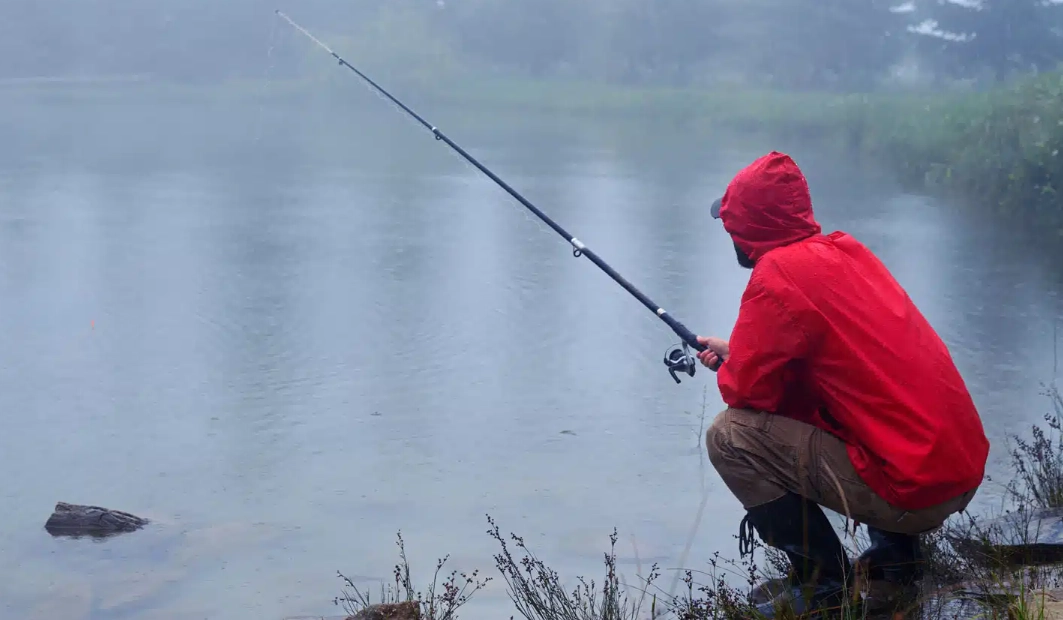
The First 2 to 6 Hours After the Rain Stops
Right after the rain stops, the water is usually still rising. That rising water carries food and mud. Fish move shallow to feed, but they are not always easy to catch because visibility drops. I treat the first two hours as a scouting window. I walk the bank, watch the edge where clear water meets muddy water, and look for current seams behind rocks and bridge pilings.
Between hour two and hour six, the water often peaks and begins to stabilize. This is the window I actually fish hard. Baitfish and nymphs get flushed out of the banks, and predator fish sit right at the edge of that dirty water waiting for an easy meal. A slow retrieve along the mud line beats casting into the middle of the chocolate milk.
Field note: On a small limestone creek in central Pennsylvania, I watched the water go from clear to brown in 40 minutes after a summer thunderstorm. The trout shut off completely for the first hour after the rain stopped. Then, right around the two-hour mark, the creek cleared enough at the tail of a pool and I picked up three browns on a olive woolly bugger. The fish had not moved far. They just needed the current to slow down.
If the rain was light and brief, the window opens sooner. If it was a downpour, wait longer. A quick rule I use: if I cannot see my boot soles in 12 inches of water, the fish are still dealing with dirty water and I need to slow down or move to a clearer tributary.
Water Clarity Decides More Than the Clock
Most articles tell you to fish after rain because fish feed aggressively. That is half true. The other half is that muddy water makes feeding harder for sight feeders. So the real question is not just when, but where the water clears first.
Here is how I read clarity after rain:
- Clear to slightly stained (can see 2 to 3 feet down): Fish are still feeding. This is prime time. Throw streamers, spinnerbaits, or a nymph under an indicator.
- Stained but not muddy (can see about 1 foot): Fish are there but cautious. Slow down. Use darker lures and add scent if allowed.
- Muddy (less than 6 inches visibility): Move to feeder creeks or wait. The main river is not worth your time yet.
I keep a small white spoon in my box just for this. I drop it 12 inches under the surface and watch how long it takes to disappear. That tells me more than any fishing app.
How Trout, Bass, and Carp React Differently
Different fish use the post-rain window in different ways. You cannot fish the same clock for all of them.
Trout After Rain
Trout hate fast, dirty water. They will tuck behind boulders and log jams where the current breaks. I wait for the water to drop just enough that the current softens. That is usually 3 to 8 hours after the rain stops, depending on the gradient. On steep mountain streams, the water clears faster but the current stays pushy. On spring creeks, the water stays clear longer but rises slowly. I have had my best trout days in the last two hours of daylight after a morning rain, when the water has dropped and the bugs start moving again.
Bass After Rain
Bass are more forgiving. They move shallow when rain cools the surface and pushes bait against the bank. The first 24 hours after rain can be excellent for bass, especially around flooded brush and incoming creek mouths. I throw a spinnerbait or a squarebill crankbait parallel to the bank where the muddy water meets the clear. If the water is still rising, I fish the new edge. If it is falling, I back off and fish the first drop.
Carp After Rain
Carp get active when rain washes worms and seeds into the shallows. I look for muddy patches near grass beds and fish a simple sweetcorn or boilie on a hair rig. The best window is usually 4 to 12 hours after rain, when the water warms a touch and the fish start rooting along the bottom. I have caught carp in water so shallow their backs were out of the water, right after a summer rain. That is not a fluke. That is a pattern.
Three Mistakes I See Every Spring
I guide a few friends each spring, and the same errors show up every time it rains.
- Fishing the middle of the river too early. Fish move to the edges after rain. Casting into the fast center is wasted effort. Fish the slack water behind structure and the inside bends.
- Ignoring water temperature. Rain in early spring can drop water temps and shut fish down. Rain in late summer can cool a hot river and turn fish on. The season matters as much as the rain.
- Staying too long in muddy water. If the water is brown and rising, leave. Come back when it starts to drop. I have wasted too many afternoons hoping a muddy river would turn on. It rarely does.
One more thing. Rising water can be dangerous. I carry a wading staff and I do not cross a river that is still coming up. No fish is worth a swim.
What the Barometer Does After a Storm
Barometric pressure gets a lot of attention in fishing circles. After a front passes, pressure usually rises. A rising barometer often means fish become less active for a short period. I have seen this on bass lakes. The bite slows right after the front clears, then picks up again a day later. That is why I do not rush out the moment the sun comes back. I give the fish a few hours to adjust, then I fish the falling water and the feeding lanes.
Does that mean you should stay home when the pressure is rising? No. It means you should slow down and fish deeper or tighter to cover. A jig dragged slowly along a ledge can still produce when a fast moving bait gets ignored.
| Post-Rain Window | Water Condition | What I Fish | My Confidence |
|---|---|---|---|
| 0 to 2 hours after rain stops | Rising, dirty | Scout only, no serious fishing | Low |
| 2 to 6 hours after rain stops | Peaking or stabilizing | Streamers, spinnerbaits, worms near the mud line | High |
| 6 to 12 hours after rain stops | Starting to clear | Nymphs, crankbaits, carp baits on the bottom | Medium to high |
| 12 to 24 hours after rain stops | Clearing, dropping | Dry flies (trout), topwater (bass), sight fishing carp | Medium |
Questions I Get on the Bank
How long after rain do fish start biting again in a muddy river?
In a muddy river, I wait for the water to stop rising and start clearing. That is usually 6 to 12 hours after the rain stops. If the river is still rising and brown, the fish are not actively feeding in the main current. Look for clearer tributaries or wait for the drop.
Is it better to fish during rain or after rain for trout?
Light rain during the day can be great for trout because it hides you and washes food into the current. Heavy rain during the storm is usually a waste of time. After the rain, the best trout window is when the water drops and clears just enough to see your boots. For small creeks, that can be 2 to 4 hours. For bigger rivers, it can take half a day.
Does rising water after rain push fish downstream or upstream?
Most fish move to the edges and into slower water, not straight downstream. Some baitfish get flushed downstream, and predator fish follow them to the first ambush point. I focus on the mouth of feeder creeks, the inside of bends, and behind bridge pilings. That is where I find fish stacked after a hard rain.
What is the worst mistake anglers make when fishing after rain?
Fishing too fast and too far out. The water is off color, so people cast long and retrieve fast. That is backwards. Fish are close to the bank. Slow down, shorten your cast, and fish parallel to the shore. You will get more hits.
Should I use brighter lures after rain?
I use darker lures in muddy water because they create a better silhouette. Black, dark blue, and olive work better than chartreuse in low visibility. Save the bright colors for when the water clears and the sun comes out. That is a small detail that makes a big difference.
This article was fact-checked against field observations and standard fishing references.