I've spent more mornings than I can count standing on muddy banks, watching boats glide past to the spots I can't reach. Bank fishing is a different game. You don't get to chase the fish — you have to read the water, pick the right lure, and make every cast count. These bank fishing tips come from years of trial, error, and a few frustrating skunks. The core idea? Stop fishing where it's easy to stand and start fishing where the fish actually live.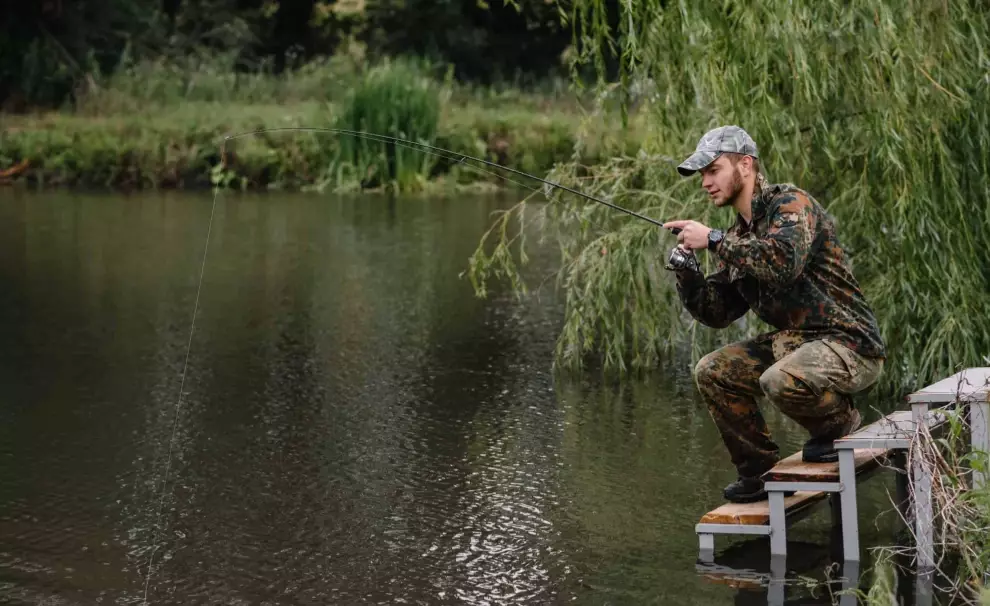
Quick Navigation
How Do You Read a Bank Like a Pro?
Most bank anglers walk to the water's edge and cast straight out. That's the first mistake. Fish don't hang out in a straight line from your feet. They relate to structure — drop-offs, weed lines, submerged timber, riprap. The bank itself tells you where those are if you pay attention.
Look for points where the shoreline juts out. Those points often have a current break or a depth change on the downstream side. I always walk a hundred yards in each direction before making a cast. It sounds simple, but it's the single best bank fishing tip I can give. On a local reservoir last spring, I found a stretch where the riprap turned into a sandy flat. The bass were stacked on the edge of that transition. No boat needed.
Scan the Water for These Three Cues
- Color changes: A patch of darker water usually means deeper bottom or a weed bed. Fish use it as cover.
- Surface breaks: A slight boil or ripple against the current often means structure underneath — a rock, a stump, a ledge.
- Bait activity: If you see minnows skipping, something's chasing them. Position yourself within casting distance of that chaos, but don't cast right into it. Cast to the edge.
A non-consensus tip: don't ignore the windward bank. Everyone heads to the calm side. But wind pushes plankton and baitfish against the windward shore. The fishing can be tougher to cast, but the fish are often there. I learned that from a old-timer at a local lake who out-fished me three trips in a row before I asked what he was doing.
Gear That Actually Matters for Bank Fishing
You don't need a boat to fish well, but you do need to be honest about your setup. Bank fishing has specific demands: long casts, varied cover, and the need to carry everything on your back. Here's what I've found works after testing too many combos to admit.
| Gear Item | What to Look For | Why It Matters on the Bank |
|---|---|---|
| Rod length | 7 to 7'6" medium-heavy spinning rod | Extra length gives you casting distance and leverage over cover |
| Reel | 3000 to 4000 size spinning reel with a smooth drag | Handles big fish without backlashing like a baitcaster |
| Line | 20 lb braid mainline with a 12 lb fluorocarbon leader | Braid casts far; leader adds abrasion resistance around rocks |
| Lures | Texas-rigged worms, swim jigs, and lipless crankbaits | Weedless options cover water without constant snags |
| Tackle bag | A compact backpack or sling pack | You'll walk more than you think — keep it light |
One thing I wish someone had told me earlier: don't skimp on the leader. Bank fishing puts your line against all kinds of rough edges — concrete, riprap, shell beds. A cheap leader breaks, and you lose the lure and the fish. I've watched too many beginners tie on a worm with a six-pound mono leader and wonder why they keep breaking off.
Personal note: I used to carry three rods, convinced I'd need every one. Now I carry one spinning rod and a small box of proven lures. Fewer choices mean more time fishing and less time tying knots on the bank.
Bank Fishing Techniques by Season
Fish move with the seasons. Bank anglers need to adapt because the bank is fixed — the fish aren't. Here's a rough seasonal guide based on my logs from local lakes and rivers.
Spring: Target the Shallows
Fish move shallow to spawn. Look for flat, warmer water with hard bottom. A weightless Texas rig or a slow-rolled spinnerbait works well. Cast parallel to the bank, not away from it. I've caught my biggest spring bass within ten feet of the shoreline, right where the water turns from gravel to mud.
Summer: Go Deep or Go at Night
Midday heat pushes fish deep or into shade. Bank anglers can't reach deep water from shore. So either fish at dawn and dusk, or target shaded banks with overhanging trees. A topwater popper walked under a tree at dusk gets violent strikes. A dropshot on a deep point is tough from the bank — save that for the boat crowd.
Fall: Follow the Bait
Baitfish school up in creeks and coves. Find the bait, find the fish. Lipless crankbaits burned over shallow flats near the bank are a solid bet. I've had good luck with a squarebill crankbait deflecting off riprap — the fish sit right against the rock and hit it on the pause.
Winter: Slow Down
Cold water means lethargic fish. A suspending jerkbait twitched slowly near deep water access points is one of the few bank-friendly options. I'll find a steep bank where the water drops off quickly, cast a jerkbait, and let it sit for long seconds before twitching. Patience beats speed.
What Are the Biggest Bank Fishing Mistakes?
Let's talk about the stuff that keeps your line empty. Some of these are things I did for years without realizing they were the problem.
Fishing the same spot all day. If you haven't had a bite in thirty minutes, move. Bank anglers can walk. Use that. Fish one point for 20 minutes, move to the next. Cover water.
Casting too far. Beginners are obsessed with distance. But the fish often sit close — just beyond the visible weed line, or right under the bank. I've caught fish within an arm's length of the shore where the water turns from light to dark. Make a short, accurate cast instead of a long, sloppy one.
Ignoring the sun. Fish face the sun to feed. If the sun's in your face, fish might be looking toward you. Adjust your casting angle so your lure approaches from the side, not straight into their face. It sounds small. It matters.
Overlooking the obvious access point. The most-pressured bank near the parking lot is usually where beginners fish. Walk the extra half mile. I've found quality fish in spots that required a bit of a hike — not because the fish are smarter, but because nobody bothers to go there.
FAQ: Real Questions from Shore Anglers
I've made plenty of mistakes on the bank, and I'll make more. But these tips have turned slow days into fish on the line more times than I can count. Fish smart, move often, and don't ignore what the bank is telling you.