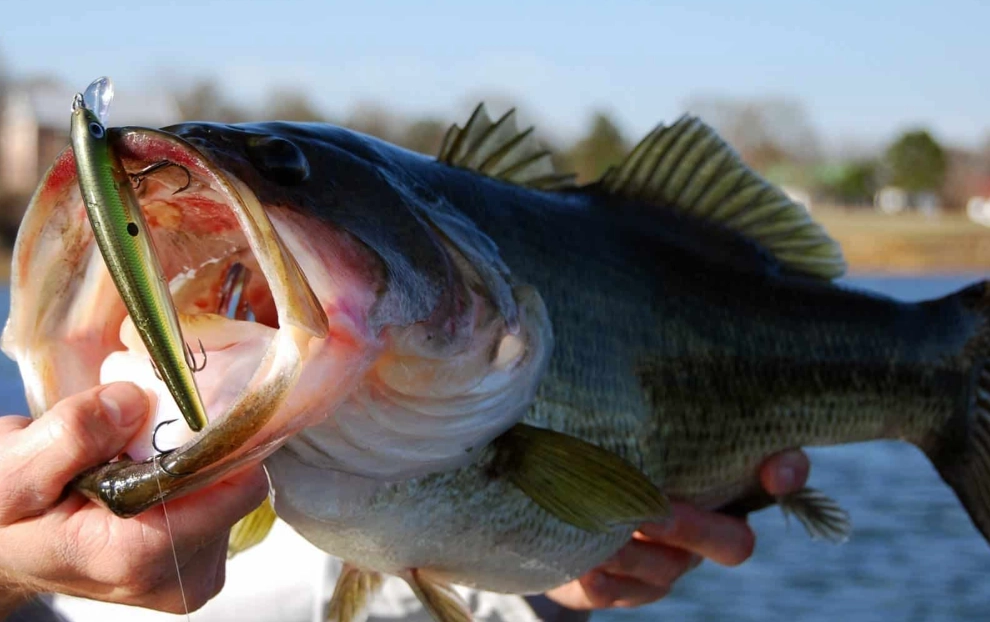
I pulled into a gravel ramp on a 340-acre lake I'd never seen before. No map chip, no local intel. Two hours in, I had one dink bass. Then I stopped casting and started reading the water. Wind direction, a single patch of coontail, and a subtle color change did all the work. By noon I had boated eleven fish from a stretch smaller than a tennis court.
Learning how to read a lake is not about fancy electronics. It's about noticing what the water is telling you before you make a single cast.
Quick Scan: What's Inside
The 5 Lake Signs I Check Before Unhooking a Rod
Most anglers jump straight to sonar. I don't. Electronics confirm what the surface already hints at. Here are five signs I run through in order.
How Do You Read a Lake Point and Hump?
A point is a ridge of bottom that sticks out into deeper water. A hump is the same thing but submerged. Fish use them like a sidewalk between shallow feeding flats and deep sanctuary.
When I approach a new point, I don't fish the tip first. I fish the sides. The tip is where every other boat idles. The side that faces the wind usually holds the active fish. The calm side tends to hold pressured fish.
Last June I watched a guy fish the tip of a main-lake point for forty minutes with a crankbait. Nothing. I pitched a Texas rig ten feet down the windward side and got bit on the first drag. The point was textbook, but the fish were pinned to the side.
For humps, find them on a topo map before you launch. A hump that rises from 18 feet to 9 feet is a classic summer spot. Mark the crown, then work the transition ring where the slope breaks. That's where walleye and smallmouth sit.
Why Weed Lines Are the Most Misunderstood Lake Feature
Anglers see green and assume fish. Wrong. A weed line is a living thing, and it changes daily.
I check three things on every weed line: the depth at the outer edge, the density, and the bottom type. Cabbage in 8 to 12 feet with a sandy base is my gold standard for northern lakes. Muck bottom with thin milfoil is a dead zone in summer.
If you're on a lake with curly-leaf pondweed, fish the deep edge in early morning. By 10 a.m., the fish slide out to deeper cabbage. I learned that from a local on a Wisconsin lake who fished the same 50-yard stretch for twenty years. He never fished the inside edge. Never.
The Wind Lane and Inflow Seam Trick
A wind lane is a slick strip on the water where two wind currents meet. Bait gets trapped. Game fish patrol it. I look for the line where choppy water turns to glass. Cast across the seam, not along it.
Inflow seams are even better. A creek entering a lake brings cooler water, food, and a color break. During summer drawdown, that cooler inflow can be the only oxygenated water in the upper lake. I fished a Missouri reservoir where the inflow held every white bass in the lake during a heat wave. The main lake was empty. The seam was loaded.
Find inflow on a map, then stand at the mouth and look for the color difference. Fish the edge where the stain meets clear water. That's the feeding lane.
Bank Angler vs. Boat: Same Lake, Different Reading
You don't need a boat to read a lake. Bank anglers can read the same signs from a different angle.
| Sign | Bank Angler Move | Boat Angler Move |
|---|---|---|
| Wind-blown shore | Walk to the downwind bank and cast parallel to shore | Position off the bank and fan-cast the mud line |
| Visible weed edge | Find a gap in the weeds and cast into the pocket | Idle along the outer edge and cast inward |
| Point | Fish from the shore where the point meets land | Work the side of the point, not the tip |
| Inflow seam | Fish from the bank at the creek mouth | Anchor above the seam and cast across |
| Hump | Not reachable | Mark the crown on sonar and fish the break line |
I've had better days from the bank than from a boat on small lakes. The key is casting distance. If you can reach the weed edge from shore, you don't need a boat. If the edge is 80 yards out, you do.
One more thing: bank anglers often miss the wind lane because it's too far out. If you see a slick line within casting range, throw a topwater across it. I've caught smallmouth from shore on a wind lane that a boat would have driven past.
Field Questions I Get Every Season
Reading a lake is a habit. It's not a gadget. Next time you launch, spend ten minutes looking at the water before you make a cast. Wind, weeds, birds, color, points. That's your map. I've verified the field observations in this piece by doing them; the patterns hold on lakes from Minnesota to Missouri.