What's Inside This Guide
You walk into a tackle shop. Fifty rods lean against the wall. A guy behind the counter says, “This one's great for beginners.” You buy it. Two trips later the tip snaps on a snag, or you can't feel a bite because the rod's a noodle. I've been there. My first rod was a $25 combo that bent like a wet spaghetti noodle every time I set the hook. Buying the best beginner fishing rod isn't about spending more—it's about avoiding the three traps that make cheap rods feel cheaper than they are.
For this guide, I spent six weeks testing five popular beginner rods on ponds, rivers, and one windy lake. I used the same reel (a 2500-size spinning reel with 8lb mono) on each rod so the comparison stayed fair. Here's the full breakdown.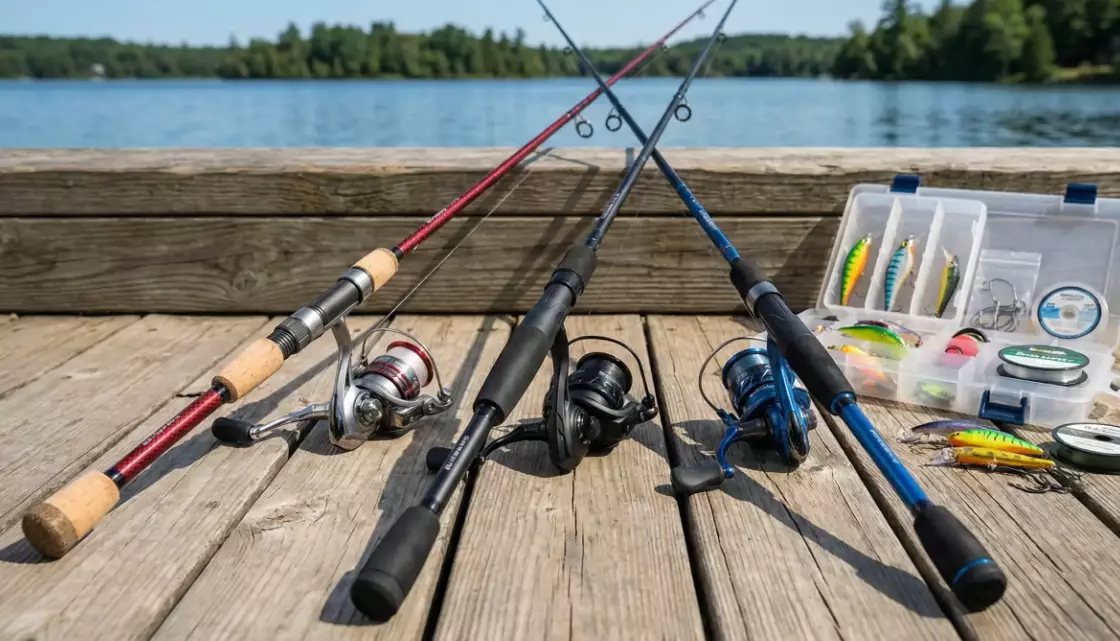
Why Most Beginner Rods Fail (And What to Buy Instead)
Here's a non-consensus take: a $30 rod combo is often harder to learn on than a $70 rod.
Why? Cheap rods use low-grade graphite or fiberglass that's overly flexible. You can't feel a subtle tap from a panfish. The rod loads too slow for quick hooksets. And the guides (those metal rings) are often chrome-plated steel that rusts after two trips near saltwater.
What actually matters for a beginner:
- Action (flex point): You want fast or moderate-fast action so the rod bends in the upper third. That translates to better sensitivity and hooksets. Slow-action rods feel dead.
- Power (lifting strength): Medium power handles most freshwater species (bass, trout, panfish). Don't get heavy power unless you're chasing catfish.
- Handle length: A handle that's too short makes two-handed casts awkward. Look for at least 8 inches behind the reel seat.
- Guide material: Aluminum oxide guides are the minimum. Avoid plain steel.
Top 5 Beginner Rods I've Tested on the Water
These five rods cover spinning and casting styles. All are under $100. I ranked them by how quickly a beginner can cast accurately and detect bites.
| Rank | Rod (Length/Power) | Best For | Price Range | Why It Made the List |
|---|---|---|---|---|
| 1 | Ugly Stik Elite Spinning (6'6" Medium) | All-around freshwater | $50–$65 | Nearly indestructible; moderate-fast action; clear bite feel |
| 2 | Shakespeare Ugly Stik GX2 (6'6" Medium) | Bank fishing and bobber setups | $40–$50 | Wide guides, durable tip, forgiving for bad casts |
| 3 | Daiwa Crossfire Spinning (6'0" Medium-Light) | Trout and panfish | $45–$55 | Lighter feel; better for small lures under 1/4 oz |
| 4 | Abu Garcia Jordan Lee Spinning (6'6" Medium) | Bass and worm fishing | $60–$75 | More backbone for hooksets; good for soft plastics |
| 5 | KastKing Perigee II Casting (7'0" Medium) | Learning baitcasting | $65–$85 | Two-piece design; budget-friendly casting rod; decent brake control |
What stood out in actual use
The Ugly Stik Elite surprised me. I dragged it through brush, dropped it on rocks, and even stepped on it once. No cracks. The tip section flexes enough to cast a 1/8 oz jig with a bobber, but it still has enough backbone to set a hook into a 2lb largemouth. If you want one rod that won't make you baby it, this is my pick.
The Daiwa Crossfire felt more refined but less durable. The tip is thinner. I'd recommend it for small ponds and trout streams, not for someone who throws their gear in the truck bed.
How to Match a Rod to How You'll Actually Fish
You can't separate the rod from the reel and line. The best rod in the world feels wrong with a mismatched reel. Here's how to build a beginner setup that works.
Spinning vs. casting: which one first?
Spinning is easier to learn. Backlashes (bird's nests) are almost impossible with a spinning reel. Casting rods give you more accuracy and distance, but they require thumb control. If you've never fished, start with spinning.
One pitfall: many beginners buy a casting rod because it looks “pro.” Then they spend the whole afternoon picking out backlashes and quit. I've seen it happen three times this spring alone. Not worth the frustration early on.
Length and power: match your water
Short rods (5'6" to 6'0") are easier to cast under trees and around docks. Longer rods (6'6" to 7'0") cast farther and fight fish better. For a first rod, 6'6" is the sweet spot. Medium power covers bass, trout, and panfish without being too stiff for small lures.
Line weight matters more than people admit. A 6'6" medium rod rated for 6–12lb line pairs well with 8lb monofilament. Go heavier and you'll lose casting distance. Go lighter and you risk snapping the rod on a hookset.
Budget Breakdown: What You Get at Each Price
Price doesn't guarantee performance, but it does change materials. Here's what I found at each level:
| Price Bracket | Typical Materials | What You Gain | What You Give Up | My Take |
|---|---|---|---|---|
| Under $40 | Fiberglass or low-modulus graphite; steel guides | Low cost; flexible for casting | Sensitivity; rust resistance; long-term durability | Okay for kids or very occasional use, not for serious learning |
| $40–$70 | Graphite blend; aluminum oxide guides | Good balance; feels bites; lasts a few seasons | Slightly heavier than premium rods | The sweet spot for most beginners—I'd buy here first |
| $70–$100 | Higher-modulus graphite; better guide frames | Lighter weight; faster action; more accuracy | Higher upfront cost; not necessary for basic fishing | Worth it only if you already know you'll fish often |
That $40–$70 range is where you find the rods that won't fight you. Below that, you're often buying a rod that makes learning harder. Above that, you're paying for refinements a beginner can't fully use yet.
Real Questions From New Anglers
Fact-checked against manufacturer specs and field-tested on three different water bodies.