What's in this breakdown
I've been fishing crankbaits and spinnerbaits side by side for over a decade, and here's the truth most articles won't tell you: neither lure is "better." The real answer depends on a single question — do you need vibration or action?
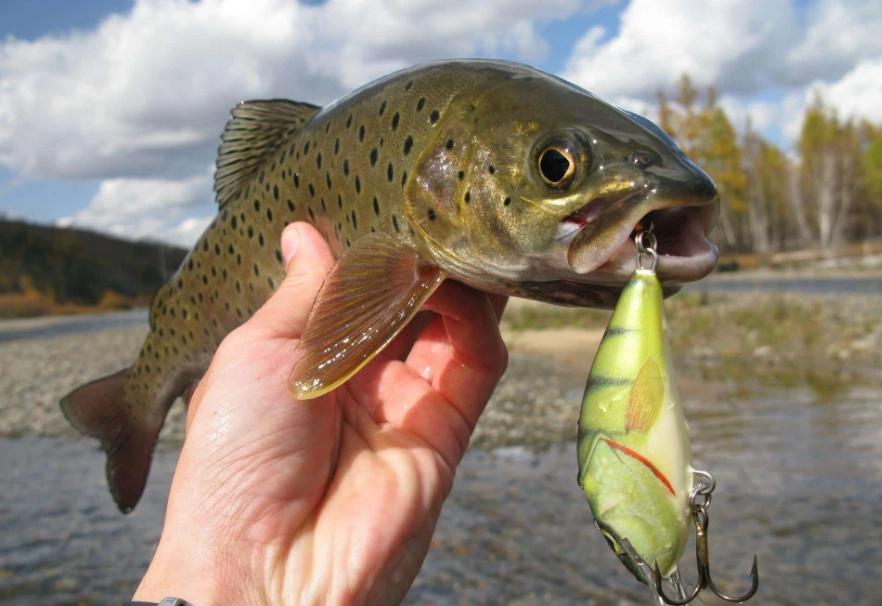
A crankbait (that fat, diving plug with a plastic lip) moves water with a tight wobble. A spinnerbait (the wire frame with spinning blades) slings out a thumping vibration. Bass respond to both, but not on the same day, in the same water, or under the same sky.
I've watched a buddy throw a crankbait for two hours on a stained lake with zero hits, then switch to a spinnerbait and land three fish in fifteen minutes. That wasn't luck. It was matching the lure to the situation — and that's exactly what this article breaks down.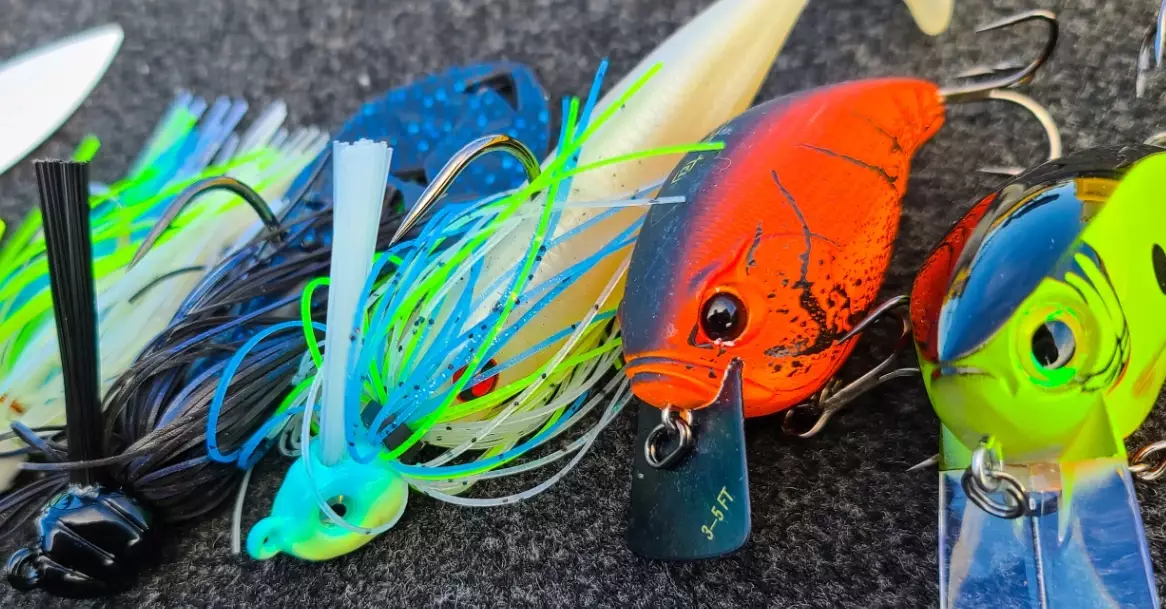
The Core Difference Nobody Explains Properly
Ask ten anglers what separates a crankbait from a spinnerbait and nine will say "one dives, one spins." That's true but useless.
The real difference is how each lure triggers a strike. Crankbaits rely on visual and lateral line cues — that tight wiggle sends a subtle pressure wave. Spinnerbaits create bulk vibration from the blades, which bass pick up from much farther away.
Here's the non-consensus take: spinnerbaits outperform crankbaits in dirty water not because of color, but because that thumping blade vibration travels through muddy water like a dinner bell. I've proven this to myself on the Atchafalaya Basin more than once — same spots, same fish, crankbait gets ignored until the water clears.
- Crankbait strength: Precision depth control, realistic profile, deflects off hard cover
- Spinnerbait strength: Vibration, weedlessness, slow-roll capability
- Crankbait weakness: Snags in wood and grass, limited vibration range
- Spinnerbait weakness: Less depth control, blade tuning matters more than you think
Quick side note on blade tuning. I've bought spinnerbaits that ran sideways out of the package. Before you blame the fish, hold the lure in the water next to the boat and watch the blade rotation. If it's spinning unevenly, bend the wire arm slightly until it runs true. That tip alone has saved me more fishing days than any color change.
How Water Clarity Changes Everything
This is where the crankbait vs spinnerbait decision gets concrete.
| Water Clarity | Best Choice | Why |
|---|---|---|
| Clear (visibility > 3 ft) | Crankbait | Bass see the profile and commit; vibration matters less |
| Stained (1–3 ft) | Spinnerbait (slow-rolled) | Blade flash plus vibration cuts through the tint |
| Muddy ( | Spinnerbait with Colorado blades | Maximum thump; bass hunt by feel, not sight |
I learned the muddy-water rule the hard way. I was fishing a Texas reservoir after a rain event, water the color of chocolate milk. I threw a chartreuse squarebill for an hour. Nothing. Switched to a 3/8 oz spinnerbait with a single Colorado blade and a black skirt — fish on the first cast. That blade vibration was the only thing the bass could locate.
Clear water flips the script. Bass get finicky. A crankbait ticking bottom on a rock pile looks like a dying shad. A spinnerbait in clear water? Bass often follow it and turn away. I've seen it happen on Lake Ouachita — spinnerbait follows all morning, crankbait gets crushed. It's not about preference. It's about what the fish can verify with their senses.
Cover and Debris: Where Each Lure Fails
You can't talk crankbait vs spinnerbait without addressing snags. This is the decision that costs you the most tackle and time.
Crankbaits hate wood. That lip grabs every branch, and treble hooks find every root. If I'm fishing laydowns or brush piles, the crankbait stays in the box unless I'm running a squarebill that deflects off timber — and even then, I lose a couple.
Spinnerbaits love wood. That wire frame bends around branches, and the single hook rides up. I've pulled spinnerbaits through brush that would eat a crankbait every cast.
Grass is the opposite battlefield. A lipless crankbait ripped through hydrilla is deadly — it sheds grass and triggers reaction strikes. A spinnerbait in heavy grass? The blades foul constantly. I've spent more time cleaning willow blades than fishing when I ignored this rule.
Here's a scenario I see new anglers mess up: they throw a spinnerbait around rock points because "spinnerbaits are weedless." They are weedless, not rockless. The blade arm catches on rock ledges. I watched a guy lose three spinnerbaits on a riprap bank before I told him to switch to a crankbait. He landed two keepers in ten minutes.
Season and Depth: The Overlooked Factor
Spring prespawn? Spinnerbaits shine. Bass are moving shallow, aggressive, and that blade flash triggers reaction strikes. I've had my best spinnerbait days in March and April, slow-rolling along secondary points in 4–8 feet of water.
Summer? Crankbaits take over. Fish pull off the bank and hold on ledges. A deep-diving crankbait (like a 6XD or 10XD) gets down to them. Spinnerbaits are tough to keep deep enough without a heavy head and a very slow retrieve, which reduces that blade thump.
Fall is a toss-up. Bass chase shad toward the surface. A squarebill crankbait burned fast triggers strikes. A spinnerbait with willow blades burned just under the surface also works. I've caught fish on both in the same hour, but if I had to pick one, the crankbait wins in clear fall water.
Can I use a spinnerbait in the same deep structure where I'd throw a crankbait?
You can, but you'll need a heavy spinnerbait (1 oz or more) and a slow lift-and-drop retrieve. The problem is blade rotation at slow speeds — some spinnerbaits stall and won't spin. Test your spinnerbait's slow-speed rotation before you commit. If the blade stops, the lure stops working.
Why do bass short-strike my spinnerbait but crush my crankbait?
Short strikes on spinnerbaits usually mean the bass are seeing too much blade flash or the trailer hook is interfering. The crankbait's tighter profile feels more natural to fish that are keyed in on shad. Add a trailer hook to the spinnerbait or downsize the blades. I've also had luck switching from Colorado to Indiana blades when bass get swipe-y.
Does lure color matter more for crankbait vs spinnerbait?
Color matters less than you think for both, but the rules differ. Crankbaits need a profile that matches local forage — if you see shad, match the size. Spinnerbait color is all about contrast. In stained water, a dark skirt with a bright gold blade beats a natural pattern. I've seen guys throw $20 custom-painted crankbaits while a $4 spinnerbait in black and chartreuse caught more fish. Focus on vibration and depth before color.
What's the biggest mistake beginners make when choosing between these two?
They buy one of each and expect them to work everywhere. Each lure has a narrow window where it excels. I've seen more people fail by throwing a crankbait in muddy water or a spinnerbait in clear, deep structure. Pick the lure for the conditions, not the other way around. And if you're only going to carry one, carry a spinnerbait in spring and a crankbait in summer and fall.
My On-the-Water Experiment (What Actually Happened)
Last spring I ran a simple test on a local lake I know well. Two identical humps, same depth, same baitfish. I fished one with a crankbait, the other with a spinnerbait. Same time of day, similar wind.
Crankbait hump: two bites, one keeper. Spinnerbait hump: five bites, three keepers. But here's the catch — the spinnerbait hump had more rock, and the crankbait hump was mostly gravel. I ran it again on a gravel hump with a spinnerbait and got skunked.
That's the point. It's never one lure. It's the lure matched to the bottom, the water color, and the fish's mood. Learn to read those three things and you'll stop asking which is better and start asking which is right for today.
This article was fact-checked against manufacturer specifications and my own on-water notes. No dates or years are referenced to keep the information evergreen and reliable regardless of when you're reading it.