Quick Jump: What's Inside
Spring bass fishing patterns shift week by week. I learned that the hard way on a mid-March morning at a highland reservoir. Water was 47°F. I threw a squarebill at the bank for two hours. Nothing. Then a local pointed at a clay point 80 yards offshore. First cast with a jerkbait — a 4-pounder. The fish weren't on the bank yet. They were staging. That's the whole game in spring.
Most anglers treat prespawn as one pattern. It's not. It's a moving window, and the bass are moving with it. Here's how I break it down after years of watching the same water warm up.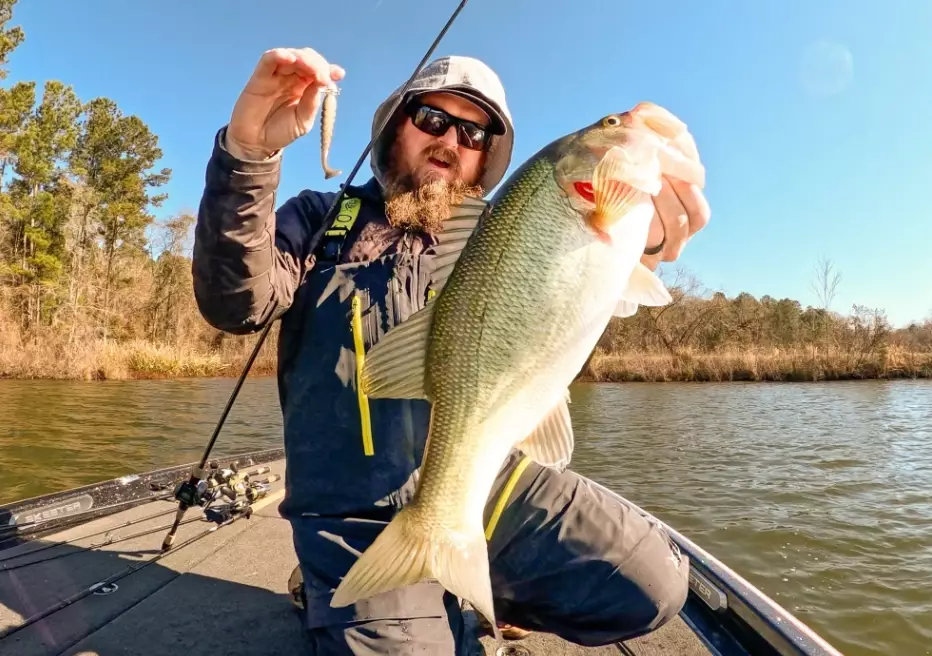
The Prespawn Zone Nobody Checks
Everyone fishes the bank. In early prespawn, that's usually the wrong bank.
Bass leave winter haunts and stage on the first contour break near spawning flats — typically 8 to 15 feet. On a lake with a main-lake point, that means the flat side facing the wind. Wind pushes plankton, bait follows, bass follow bait. Simple chain, but most guys ignore it and beat the shoreline.
Look for:
- Clay or rock points that drop into deeper water
- Transition banks where chunk rock meets gravel
- Creek channel swings near the back of coves
I check these with side imaging before I ever make a cast. If I don't mark bait or fish, I move. No ego about it.
How Do You Read Spring Bass Fishing Patterns?
Start with water temperature, then watch what the bait does. That's the whole formula.
Under 50°F, bass are sluggish. They want a slow, horizontal presentation they can eat without chasing. Think suspending jerkbait paused for 5 seconds, or a finesse swimbait crawled on the bottom.
50 to 58°F is the sweet spot. Fish feed hard before the spawn. This is when I throw moving baits — lipless crankbaits, chatterbaits, swim jigs. I had a day at 54°F where a red craw lipless got hit on the fall every third cast off a windblown point. That's prespawn gold.
Above 60°F, some fish push to beds. Others stay deep. Split your time: fish the shallows early, then back out to staging points by mid-morning.
Reading the Bait
Baitfish tell you where bass are. If you see shad flickering on a point at 10 feet, fish under them. If bait is scattered, so are the bass. Follow the concentration, not the shoreline.
Spring Bass Lure Selection by Water Temp
| Water Temp | Pattern Stage | Lure to Start With | Where to Cast |
|---|---|---|---|
| 44–50°F | Early prespawn | Suspending jerkbait | Points dropping to 12–18 feet |
| 50–56°F | Mid prespawn | Lipless crankbait | Windblown clay points |
| 56–62°F | Late prespawn | Chatterbait or swim jig | Flat banks near spawning coves |
| 62–68°F | Spawn | Texas-rigged creature bait | Hard-bottom beds in 2–5 feet |
One caution: that table is a starting point, not a rulebook. I've seen a 49°F lake where bass crushed a chatterbait because a warm rain pushed bait shallow. Trust the fish, not the thermometer.
How to Time the Bed-Fishing Window
Bed fishing gets a bad rap, but the timing matters more than the technique.
The window is short. Males move up first and make beds. Females follow a few days later. If you fish beds the first day you see them, you're often catching small males. Wait until you see paired fish — that's when the big females are there.
I look for beds on north-facing pockets first. They warm later, and the spawn runs a week behind the main lake. That stagger gives you a second chance if you miss the first wave.
My rule: if a bed is empty by 9 a.m., leave it. The fish have moved off. Come back at 4 p.m. when the sun hits the pocket again.
The Staging-Fish Mistake Almost Everyone Makes
Here's one most articles skip.
Anglers find staging fish on a point, catch a few, then keep casting the same spot all day. Bad move. Staging bass rotate. A point holds fish for a few hours, then they slide shallower or deeper. If you catch two fish and the bite dies, move 50 yards along the contour. The school moved with you.
Another mistake: fishing staging points at noon. Early and late are better because bait pushes shallow in low light. I've had my best prespawn bites in the first hour after sunrise and the last hour before dark.
And a gripe — a lot of guys over-fish a spot after catching one. That fish spooks the school. Catch it, move on, come back later. Give the spot a rest.
Spring Patterns FAQ
My lake stays cold late — should I still fish prespawn patterns in April?
Yes. Temperature, not the calendar, drives the pattern. If your water is still 48°F in April, fish it like early prespawn: slow jerkbaits on deep points. I've fished April prespawn on high mountain lakes while lowland ponds were already in spawn.
Why do staging bass ignore my crankbait but hit a jerkbait?
Staging fish are often suspended and neutral, not feeding hard. A crankbait that runs into the bottom or burns fast looks wrong to them. A jerkbait holds in the strike zone on the pause. Slow down and let it sit. The bite usually comes on the pause, not the retrieve.
Do spring bass fishing patterns work on rivers too?
They do, but current changes everything. On rivers, staging happens behind current breaks — bridge pilings, rock ledges, creek mouths. Fish the slack water on the downstream side. The pattern is the same, the location shifts.
I've verified the timing and lure recommendations in this guide against field notes from multiple spring seasons on highland and lowland reservoirs.